
Offices seem like the last place you’d expect a pest problem. No commercial kitchen, no food waste piling up, no obvious hotspots so it’s easy to assume pest control is something other businesses need to worry about.
That assumption is exactly why office pest infestations in Singapore are so commonly caught late.
The reality is that offices create conditions pests actively seek out: warmth, shelter, water, and a steady trickle of food from pantries, desks, and meeting rooms. Add Singapore’s year-round heat and humidity, a high-rise building shared with dozens of other tenants, and a bin chute that services the entire floor, and you have an environment where pests can establish themselves quietly long before anyone notices.
This guide covers everything facility managers, office administrators, and business owners need to know about pest control in commercial office environments in Singapore.
Why Offices Are More Vulnerable Than They Look
Most office pest problems don’t start with a catastrophic outbreak. They start with a crumb under a workstation, a damp ceiling tile above the server room, or a cardboard delivery box left in the storeroom for three weeks too long.
Offices have several structural vulnerabilities that make them attractive to pests:
Pantries and communal eating areas are the most common entry point. Even a well-maintained pantry has persistent food residue around toasters, under microwaves, behind the fridge, and along the base of cabinets. Cockroaches and ants don’t need much a consistent food source the size of a fingernail is enough to sustain a small colony.
False ceilings and cable trunking run throughout most commercial offices and provide excellent harbourage for cockroaches and rodents. These voids are warm, rarely disturbed, and connected across entire floors or buildings. Pests can travel between units without ever entering the main office space.
Shared infrastructure bin chutes, lift lobbies, utility rooms, delivery bays creates constant reinfestation pressure from other parts of the building. Your office could be spotless while a neighbouring unit or the ground-floor café sends cockroaches straight up through shared voids.
After-hours inactivity gives pests undisturbed access to the entire space for eight or more hours a night. Cockroaches in particular are nocturnal and will forage across desks, keyboards, and filing cabinets when the lights go out.
Air-conditioning condensate lines and server room cooling create moisture in otherwise dry environments. This is often overlooked, but damp areas near AC units are reliable cockroach and silverfish hotspots.
Health, Legal, and Reputational Risks for Businesses
Pest problems in offices aren’t just uncomfortable, they carry genuine operational risks.
Employee health and wellbeing. Cockroach allergens are a well-documented trigger for asthma and allergic reactions. Rodent droppings carry bacteria including Salmonella and Leptospira. A persistent pest problem in an office affects air quality, staff morale, and in serious cases, employee health.
Compliance and tenancy obligations. Many commercial leases in Singapore include clauses requiring tenants to maintain pest-free conditions. Building management may issue notices requiring treatment within specific timeframes. Failure to act can result in penalties or lease complications.
Client and visitor perception. A cockroach sighting during a client meeting, or an ant trail across the meeting room table, creates an impression that is very difficult to walk back. For professional services firms, law practices, financial institutions, and any business that meets clients on-site, a pest incident is a reputational risk.
Data and equipment damage. Rodents gnawing through network cables, cockroaches nesting inside server equipment, and silverfish damaging archived documents are all real operational risks particularly for businesses in financial services, legal, and data-sensitive industries.
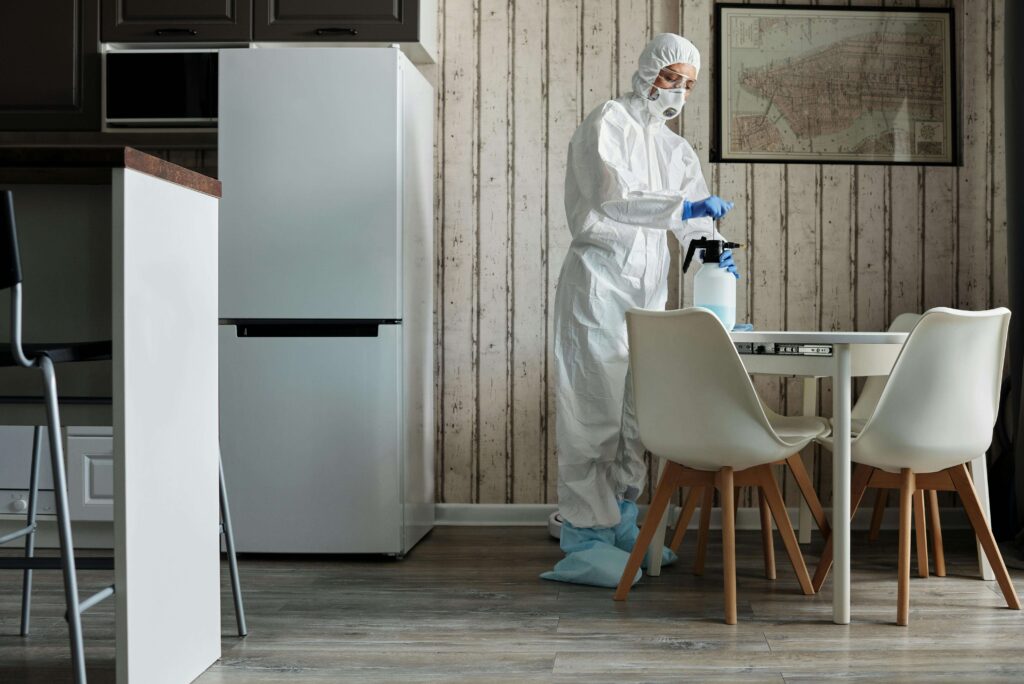
What a Professional Office Pest Control Programme Looks Like
Many offices in Singapore rely on reactive pest control, calling a company only after a sighting is reported. This approach consistently leads to repeat problems because it addresses the symptom (visible pests) without addressing the conditions driving the infestation.
A properly structured commercial pest control programme for an office environment includes the following:
Initial Site Assessment
A thorough inspection of the entire office including false ceilings, pantry, storerooms, server rooms, toilets, and utility areas to identify active pest activity, harbourage points, entry pathways, and risk factors. This should produce a documented finding, not just a verbal summary.
Targeted Treatment (Not Generic Spraying)
Effective office pest control uses targeted methods matched to the pest species and location:
- Gel baiting for cockroaches in pantry cabinets, under appliances, and along cable runs – effective with minimal disruption and no odour
- Bait stations for ants in areas near the pantry and filing rooms
- Non-repellent residual treatments for persistent cockroach activity in voids and false ceilings
- Rodent monitoring stations in storerooms, server rooms, and building perimeters where applicable
- Insect light traps (ILT) for fly monitoring in pantry and waste areas
The treatment approach should be adapted to the office environment methods that work in a restaurant kitchen aren’t always appropriate in an open-plan office with sensitive equipment and staff present.
Scheduled Follow-Up Visits
A single treatment is rarely sufficient for complete eradication, particularly for cockroaches. A structured programme includes follow-up visits at defined intervals typically every one to three months depending on pest pressure with documented findings at each visit.
Written Reports and Documentation
For facility managers, documentation matters. A professional pest control provider should supply written reports after each visit, detailing: what was inspected, what was found, what was applied, and what recommendations are made. This documentation is also useful for building management audits, lease compliance, and internal ESG or workplace health reporting.
Prevention Recommendations
Good pest control extends beyond treatment. Your provider should advise on specific structural or hygiene improvements sealing gaps around cable penetrations, improving pantry cleaning schedules, adjusting waste management practices that reduce future pest pressure.
Practical Prevention Steps for Office Management
While professional treatment handles the heavy lifting, the actions taken between visits have a significant impact on whether pests return. These are the most effective prevention measures for office environments:
Pantry hygiene is non-negotiable. The pantry area should be cleaned thoroughly at the end of each day not just wiping visible surfaces, but pulling out the microwave and toaster, cleaning under the drip tray of the water dispenser, wiping down the inside of cabinets, and ensuring the bin is covered and emptied daily. Residue that builds up over weeks becomes a reliable food source.
Enforce a clean-desk eating policy. Food consumed at workstations creates crumbs and residue across a wide area that is very difficult to clean consistently. Where possible, confine eating to the pantry and meeting rooms and ensure those areas are cleaned after use.
Manage deliveries carefully. Cardboard boxes from deliveries are a classic cockroach hitchhike vehicle. Boxes should be inspected and unpacked promptly, not stored in storerooms for extended periods. Remove cardboard packaging as quickly as possible.
Keep storerooms organised and accessible. Clutter and dense storage create exactly the harbourage conditions pests seek. Storerooms should be organised with items on racks (off the floor), regularly cleaned, and inspected as part of any pest control visit.
Address moisture proactively. Report dripping AC units, blocked condensate drains, and slow-draining pantry sinks immediately. Moisture in unexpected areas is a strong predictor of pest activity.
Log sightings. Ask staff to report pest sightings species if identifiable, location, and time. A pattern of sightings (same location, same time) is far more useful to your pest control provider than a single report.
How Often Should Offices in Singapore Have Pest Control?
The right frequency depends on the building type, pest history, and risk level. As a general guide:
Office Type | Recommended Frequency |
Low-risk (no pantry, small team) | Quarterly |
Standard office with pantry | Every 1–2 months |
Office in mixed-use building (F&B on lower floors) | Monthly |
High-risk (previous infestations, older building) | Monthly or bi-monthly |
Offices with client-facing spaces | Monthly – proactive, not reactive |
If you’re unsure, a professional assessment will identify the appropriate frequency based on your specific building and risk profile.
What to Look For When Choosing a Pest Control Provider for Your Office
Not all pest control companies are equipped to handle commercial office environments appropriately. When evaluating providers, look for:
- NEA licensing. All pest control operators in Singapore must be licensed by the National Environment Agency. This is a baseline requirement, not a differentiator but always confirm it.
- Experience with commercial office environments. Ask specifically whether they have handled offices, what methods they use in occupied spaces, and how they minimise disruption.
- Gel-bait and low-toxicity methods. Offices with staff present particularly those with sensitive equipment or staff with respiratory conditions benefit from targeted methods over broad chemical spraying.
- Written reports. If a provider doesn’t offer written documentation of findings and treatments, that’s a red flag for commercial clients.
- Responsiveness. For businesses, the ability to schedule visits around office hours and get a fast response when a sighting is reported matters.
Conclusion
Offices aren’t immune to pest problems – they’re just better at hiding them. By the time a cockroach is spotted in the pantry or a staff member reports ants on their desk, the underlying issue is usually already established.
The most effective approach for office environments is a structured, preventive pest control programme regular inspections, targeted treatment, documented findings, and consistent hygiene habits between visits. Reactive, one-off treatments will reduce visible activity in the short term, but rarely prevent recurrence in Singapore’s conditions.
If your office doesn’t have a scheduled pest control programme in place, or if you’ve been relying on ad-hoc treatments that keep delivering the same results, it’s worth getting a professional assessment to understand what’s actually driving the problem.
Conquer Pest provides commercial pest control services for offices and business premises across Singapore. Our NEA-certified team offers structured programmes designed for occupied commercial spaces with minimal disruption, full documentation, and a prevention-first approach. Contact us for a free on-site evaluation.