

Cockroaches are among the most adaptable and resilient pests on the planet, and Singapore’s warm, humid climate provides ideal conditions for them to thrive year-round. Whether you have spotted one in your kitchen or are simply trying to understand what you are dealing with, this page covers everything you need to know – from identifying the species to recognising the early signs of an infestation and protecting your home or business.
Not all cockroaches are the same. Singapore is home to several cockroach species, each with different habits, preferred environments, and levels of difficulty when it comes to control. Identifying the species you are dealing with is the essential first step in understanding the problem.
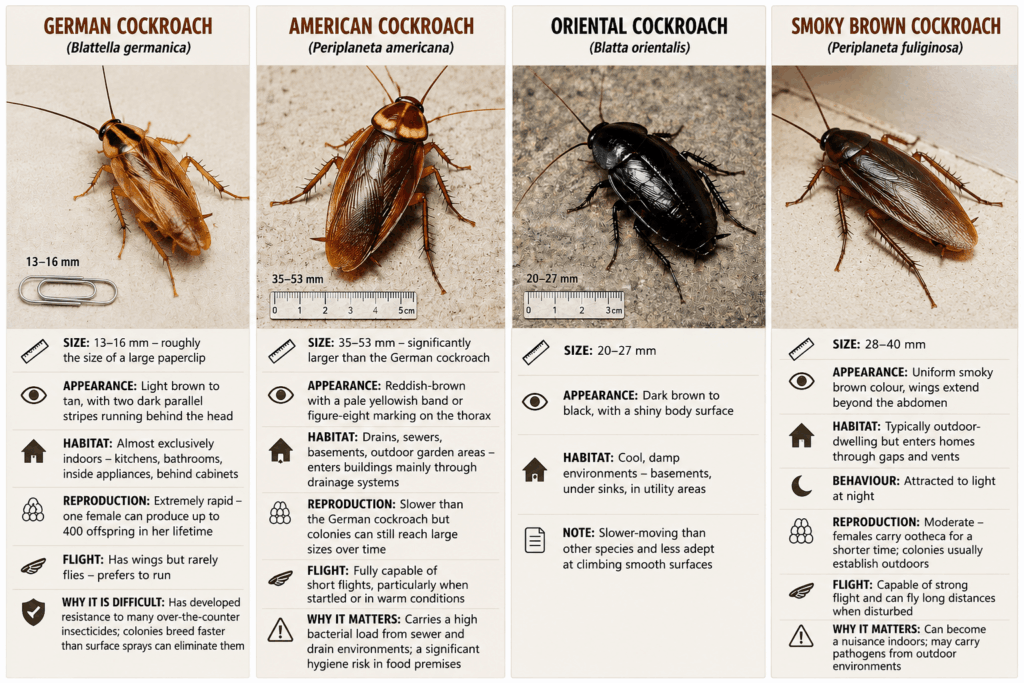
The German cockroach is the most common indoor cockroach species in Singapore and the most problematic. Despite its name, it is believed to have originated in Southeast Asia.
The American cockroach is the largest cockroach species commonly found in Singapore and is often the species people are referring to when they describe a ‘big cockroach’.
Less commonly seen than the above two species but still present in Singapore, particularly in older buildings.
Typically outdoor-dwelling but enters homes through gaps and vents. Attracted to light at night.
Cockroaches are not simply an unpleasant sight – they pose genuine, well-documented health risks to occupants of any property where they are present.
Cockroaches feed on decaying organic matter, faeces, and food waste, then crawl across food preparation surfaces, utensils, and stored food. This movement transfers bacteria, including Salmonella, E. coli, Staphylococcus, and various other pathogens associated with food poisoning, gastroenteritis, typhoid, and dysentery.
Cockroach droppings, shed skins (cuticles), saliva, and egg cases are all potent allergens. Prolonged exposure - particularly in enclosed, poorly ventilated spaces is strongly linked to the development and aggravation of asthma, especially in children. Research published in the Journal of Allergy and Clinical Immunology identifies cockroach allergens as one of the leading indoor triggers of childhood asthma globally.
Cockroaches leave behind trails of saliva, digestive fluid, and droppings as they move through a property. These traces contaminate any surface they cross from kitchen worktops and dining tables to food stored in open packaging.
Cockroaches are nocturnal and spend approximately 75% of their time hiding. By the time you see one, the colony is usually far larger than that single sighting suggests. Here are the signs to look for:
Understanding how cockroaches enter a property helps you prevent a recurrence after treatment:
Preventing German Cockroach Entry
Preventing American Cockroach Entry
Prevention measures and basic hygiene can reduce the risk of infestation, but once cockroaches have established a colony inside your property, professional treatment is almost always the most effective and cost-efficient solution. Over-the-counter sprays kill individual cockroaches on contact but do not penetrate the harbouring areas where the breeding colony lives, leaving the infestation to recover within weeks.
If you are seeing cockroaches regularly, finding droppings in multiple locations, or noticing a musty odour, these are signs that a colony is established and actively reproducing. The sooner professional treatment is carried out, the smaller and more manageable the infestation will be.
Conquer Pest provides professional cockroach pest control across Singapore for residential, commercial, and industrial clients. Our NEA-trained technicians identify the species, locate the colony, and apply the appropriate NEA-approved treatment to eliminate the infestation at the source.
We are a locally established Singapore pest control company serving homes, businesses, and industries. With over 20 years of expertise, our NEA-trained specialists deliver safe, effective, and approved solutions you can trust.
Size is the simplest initial indicator. German cockroaches are small, around 13 to 16 mm, light brown with two dark stripes behind the head, and are almost always found in kitchens and food areas.
American cockroaches are much larger, 35 to 53 mm, reddish-brown, and are typically found near drains or entering from outdoor environments. If you are unsure, a professional inspection will confirm the species before treatment begins.
Yes, this is one of the most common entry routes for American cockroaches in Singapore. They are capable of swimming short distances through drainage pipes and can emerge through floor drains, toilet bowls, and sink outlets, particularly when drain traps are dry or poorly fitted. Keeping drain covers fitted and P-traps filled with water significantly reduces this risk.
Older buildings present more opportunities for cockroach entry and harbouring, aging drainage infrastructure, more structural gaps, and more accumulated cracks in walls and flooring. However, cockroaches are found in all building types in Singapore, including new developments, as they can be introduced through infested goods regardless of building age.
German cockroach infestations in particular can escalate rapidly. A single fertilised female can produce an egg case every three to four weeks, with each case containing 30 to 40 eggs. Under ideal conditions, a warm Singapore kitchen with available food and water, a small group of cockroaches can grow to hundreds within two to three months. This is why early detection and prompt action are so important.
Not at all. German cockroaches most commonly enter homes via infested cardboard boxes and grocery deliveries, not as a result of poor hygiene. American cockroaches enter through drainage systems rather than being attracted by cleanliness levels. While good sanitation reduces food sources and makes a property less hospitable once cockroaches are present, it is not a guarantee against infestation, particularly in Singapore's high-density residential environment.