
Bed bug bites and mosquito bites can look almost identical on the skin, but they differ in pattern, timing, and where on the body they appear, and learning these differences is the fastest way to know whether you are dealing with a mosquito problem or a bed bug infestation that needs professional treatment. In Singapore’s climate, both insects are active year round, which makes the confusion even more common, since a itchy red bump in the morning could just as easily be from an open window the night before as from a hidden bed bug harbourage inside the mattress seam. It is one of the more common questions we get asked across our pest control services in Singapore. Getting the distinction right matters because the two problems call for completely different responses.
Why Bed Bug Bites and Mosquito Bites Get Confused
Both insects leave small, raised, itchy red bumps, and both bites can take anywhere from a few hours to a couple of days to fully develop, so a bite examined too early or too late can look ambiguous either way. The confusion is worsened by the fact that not everyone reacts the same way to either insect. Some people barely react to bed bug bites at all, while others develop a stronger reaction to mosquitoes than to bed bugs, which means bite appearance alone is not always a reliable indicator without also looking at the broader pattern.
How Bed Bug Bites Look and Behave
Bite Pattern
Bed bug bites often appear in a distinctive line or small cluster, sometimes described as a “breakfast, lunch, and dinner” pattern, because a single bed bug tends to feed several times in one session as it repositions along exposed skin. This lined or grouped pattern is one of the more reliable visual clues, though it does not appear in every case.
Location on the Body
Because bed bugs feed while a person sleeps and cannot bite through clothing, bites concentrate on skin that is exposed overnight, typically the arms, shoulders, neck, and legs. Someone who sleeps in long sleeves may see bites concentrated only on the hands, wrists, and face instead.
Timing
Bed bug bites appear after a night in a bed, sofa, or other upholstered furniture where bed bugs are hiding, and they are often noticed first thing in the morning. If several household members develop new bites after sleeping in the same room, or bites appear regardless of whether windows were open or closed, bed bugs become a stronger possibility than mosquitoes, and it is worth booking an inspection with our team rather than waiting for the pattern to become undeniable.
How Mosquito Bites Look and Behave
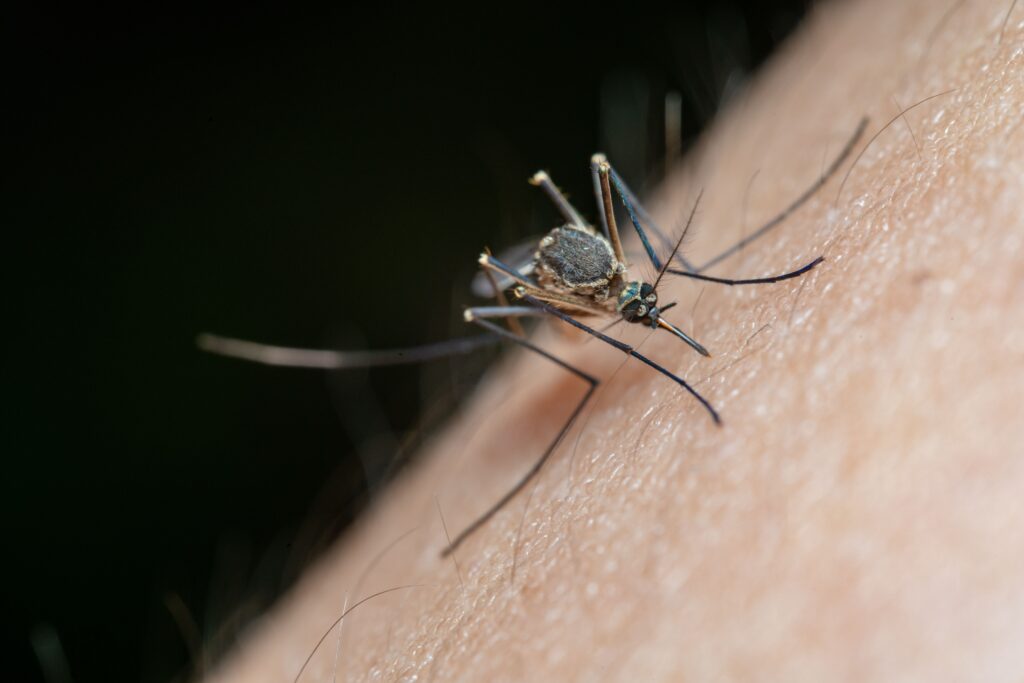
Mosquito bites tend to appear as single, isolated bumps rather than lines or clusters, because a mosquito usually feeds once and moves on rather than repositioning repeatedly like a bed bug. They can appear on any exposed skin at any time of day, since mosquitoes bite whenever they find an opportunity, including outdoors, near open windows, or around stagnant water in and around the home. Mosquito bites also tend to itch more intensely in the first few minutes before settling, while bed bug bites often take longer to start itching at all.
Key Differences at a Glance
- Pattern: bed bugs bite in lines or small clusters; mosquitoes leave isolated single bumps
- Timing: bed bug bites appear after sleeping in an infested bed or sofa; mosquito bites can happen any time, day or night
- Location: bed bug bites concentrate on skin exposed overnight; mosquito bites can appear anywhere exposed skin was available
- Onset of itch: mosquito bites often itch within minutes; bed bug bites can take hours to a day or two to become itchy
- Household spread: multiple people in the same bed or room developing bites together points toward bed bugs
- Source location: mosquito bites often correlate with time spent near stagnant water or open windows; bed bug bites correlate with a specific bed, sofa, or piece of furniture
Other Signs You’re Dealing With Bed Bugs, Not Mosquitoes
Bites are only one part of the picture, and several other signs point specifically to bed bugs rather than mosquitoes. Small rust-coloured spots on bedsheets or mattress seams, a faint musty odour in the bedroom, and tiny pale yellow shed skins along the mattress piping are all bed bug signs with no mosquito equivalent. If any of these appear alongside a new pattern of overnight bites, the case for bed bugs becomes much stronger than bites alone would suggest.
What to Do If You Suspect Bed Bugs
If bites and other signs point toward bed bugs rather than mosquitoes, the next step is a proper inspection rather than a wait-and-see approach, since bed bug populations grow quickly and spread easily to neighbouring rooms or units once established. Our bed bug pest control service starts by confirming the infestation at its source, mattress seams, bed frame joints, and skirting boards, before recommending heat treatment, NEA-approved chemical treatment, or a combination of both depending on how far the infestation has spread.
We initially noticed only a few adults on the mattresses. However, after advising the customer to dismantle the bed frame, we discovered a severe bedbug infestation.
Mosquito bites, by contrast, are usually best managed by reducing standing water and breeding sites around the home rather than through indoor pest treatment, and our mosquito control service covers exactly that kind of source reduction alongside fogging and misting where needed. Whichever insect turns out to be responsible, getting the identification right the first time avoids paying for the wrong treatment.
Frequently Asked Questions
Yes, it is entirely possible to have both bed bug bites and mosquito bites at once, particularly in Singapore where both insects are active year round regardless of season. This is exactly why pattern and timing matter more than the appearance of any single bite, since a mixed set of bites can otherwise look confusing.
No, the lined or clustered pattern is common but not universal, and some people develop scattered, random bed bug bites that look no different from mosquito bites at first glance. This is why bite pattern should be considered alongside other evidence such as shed skins, rust-coloured spotting, or a musty smell rather than relied on alone.
Individual immune response varies considerably, and a meaningful proportion of people show little or no visible reaction to bed bug saliva even after repeated bites. This means the absence of visible bites does not rule out an active infestation, particularly in a household where only some members are reacting while others show nothing.
Bed bug bites can take anywhere from a few hours to several days to become visible, and in some cases they do not appear until a week or more after the actual bite occurred. This delayed reaction is one of the reasons bed bug infestations are often more advanced than expected by the time bites are finally noticed and connected to the correct cause.
Bite marks alone are not enough to confirm bed bugs with certainty, because bite appearance overlaps too much with mosquitoes and other insects to serve as sole proof. A confirmed diagnosis needs supporting physical evidence such as live bugs, shed skins, or faecal spotting, which is exactly what a professional inspection is trained to look for.
Occasionally mosquito bites are mistaken for other insect bites or mild allergic reactions, particularly when a bite becomes unusually swollen or takes longer than expected to fade. If a bite pattern, swelling, or reaction seems unusual or persistent, it is worth having it assessed rather than assuming either bed bugs or mosquitoes by appearance alone.
Scratching does not affect the size of the underlying insect population, but it can break the skin and increase the risk of secondary infection regardless of which insect caused the bite. Reducing scratching is about protecting the skin itself, not about controlling the pest problem, which still requires separate treatment at the source.